Claes Bang, the star of The Square, on becoming a sex symbol at 51 – and why he hated the Oscars
Janice Turner
He’s Scandi, he’s 6ft 4in, he speaks five languages – and he’s suddenly a hot Hollywood property. What’s not to like? Ms Janice Turner meets the luscious Mr Bang to find out
Every woman I know had the same reaction to The Square. Whether newspaper executive or my son’s 22-year-old student girlfriend, as they watched the tall, angular, elegantly weathered actor playing the art museum curator, Christian, a thought bubble popped up: “Well, hello! Who are you? And why have I never seen you before?” Furious Google Images and IMDb searching ensued.
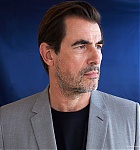
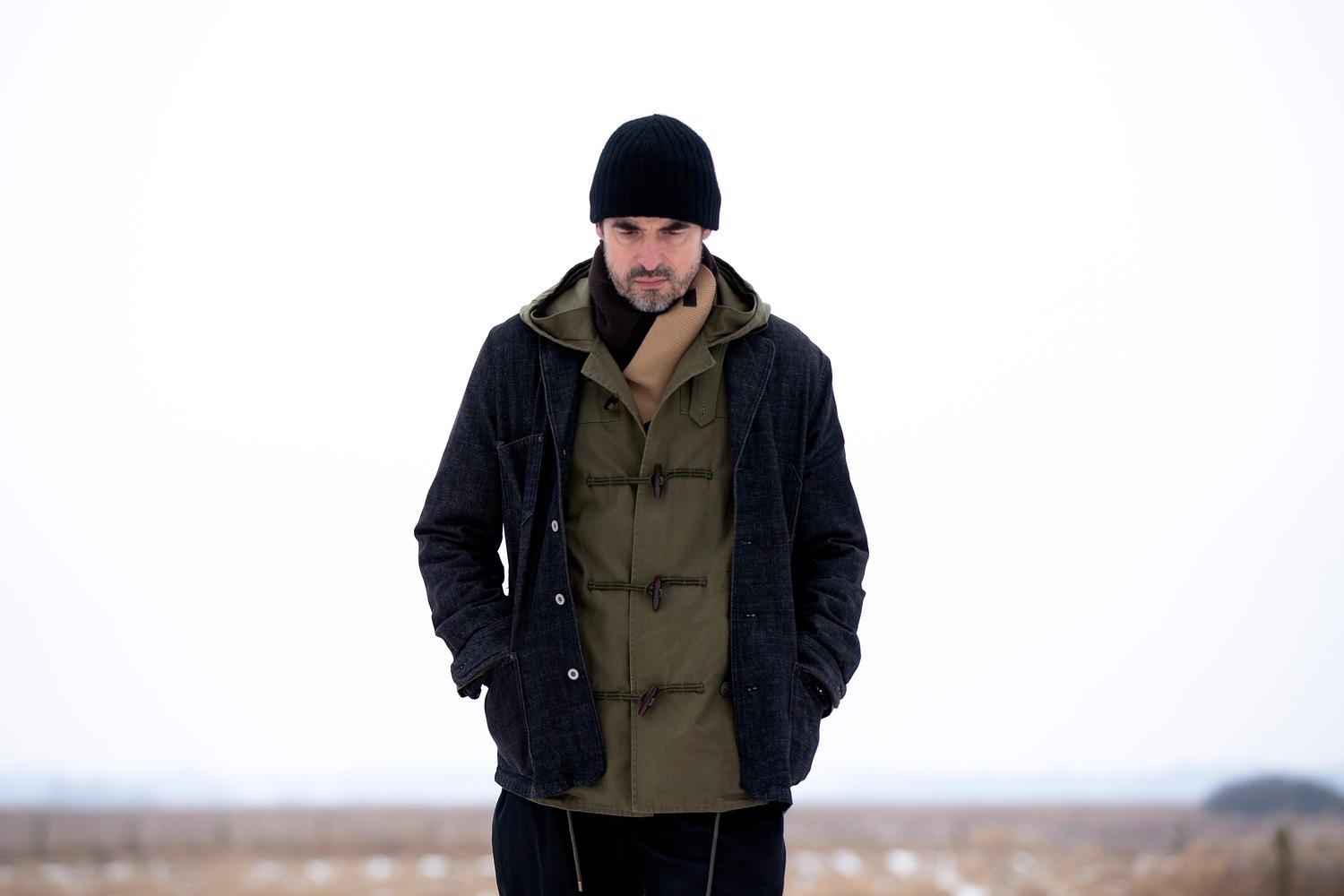
He is Claes Bang: Danish, 6ft 4.5in, 51, a stepgrandfather, tousle-haired, funny, self-deprecating, sweary, disarmingly frank, who chugs down three glasses of wine during our interview and tells me how he got off his face on cannabis jelly beans at the Golden Globes. In fact, he’s like no actor I’ve ever interviewed, certainly no Hollywood star, although now he’s on a fast track to becoming one.
We meet at 9pm in the bar of a hotel in Amsterdam where he is shooting Lyrebird, with Garth Pearce, having only just finished The Girl in the Spider’s Web opposite Clare Foy’s Lisbeth Salander in Berlin. But before The Square, which won the Palme d’Or in Cannes, an Oscar nomination and massive critical acclaim, Claes Bang wasn’t even famous in Denmark. Even during Scandi TV mania, he only managed a spin doctor in one episode of Borgen, a gigolo briefly in The Bridge.
But then along came Ruben Östlund, the demented Swedish auteur of the put-your-actors-through-hell school of Lars von Trier. His first major movie, 2014’s Force Majeure, was an indie hit; the role of Christian in The Square was so hotly contested (with two three-hour auditions) that straight after Östlund told him he had the part – “I didn’t scream on the phone, because you’re not supposed to, but I did after” – his next call was from an LA agent.
If you haven’t seen The Square (which you really should) Christian goes through a firestorm of everyday ethical nightmares that incinerates his smug, Tesla-driving, privileged life. After his iPhone is stolen in a Stockholm street scam, he tracks it to an apartment block mainly housing immigrants and puts through every door a note calling the occupant a thief. His phone is returned, but the consequences for a young Syrian boy explode in his face. Meanwhile, he louchely seduces a journalist (Elisabeth Moss of The Handmaid’s Tale), has the most cringe-making unsexy sex, then fights with her over the disposal of a condom because he believes she is sneaking to the bathroom with his semen to make a Boris Becker baby. Underlying it all is a dark satire on the contemporary art scene, climaxing in a man with Tourette syndrome repeatedly crying, “Tits!” during a po-faced gallery Q&A and a performance artist playing a silverback gorilla (Terry Notary) terrorising a stiff museum-donor dinner.
All this is hard enough for the audience, but for Bang it was four months of hell as Östlund demanded 80 takes for every scene. “Ruben wants to get deeper and deeper. He says, ‘I want to exhaust you, but in a good way.’ So you stop acting. You stop wanting something specific to happen. You stop trying to be clever. You just let the scene happen to you.”
Making The Square, Bang realised, like Christian, he has what is known as “Scanguilt”: you see yourself as a morally upstanding person yet feel entitled to ignore the poor. “Because we are really privileged. I mean, we’ve built a system where everything is taken care of. We go to the hospital, the doctor, have an education, and not pay for it. Social welfare. Everything. But also, if you step into the street and there is a homeless guy on your doorstep, many people, probably including myself, would be thinking, ‘I’m paying my taxes. Why isn’t someone taking care of this guy? Who is coming to pick him up?’ ”
“He is raffishly attractive, self-deprecating, ageing elegantly, his only exercise tennis – ‘I hate the gym’
The role was also physically exhausting: Bang shot a sequence in which he scavenges through a dumpster of real stinking rubbish in the rain for two whole nights. “The scene where we fight over the condom, we did one where she wins it, one where I win it, one where the condom breaks, the contents go on the wall … Then, in the middle of one take, Ruben shouts, ‘OK, Claes – now you have one choice, and that’s to eat it.’ So I ate it and played the whole scene with the condom hanging from my mouth, her trying to get it out.”
But what nearly broke him was a press conference in which Christian is called to account for accidentally approving a sick viral video. Östlund bought in 40 real Swedish journalists “and he just f***ing told them to grill me”. Take after take, in which Bang was interrogated, the questions changed if he got too slick at answering them, intercut with the director screaming his humiliating critique in front of the whole crew. “He really wanted me in a corner, so he kept pushing it.” Later, Bang flew out to Norway where his wife, Lis, a make-up artist, was filming. Fuming, cursing the “Swedish wanker”, he thought about not returning. Östlund has since apologised.
Given how integral Bang is to the film, he is hugely proud of The Square, never tires of talking about it. “I totally have the feeling that I got Ruben’s vibe, so we actually made the film that he wanted to make.”
The day before Bang’s 50th birthday, The Square was accepted for Cannes. Throughout the festival, the Bang buzz built. Critics applauded; one overexcited woman journalist published a “Daily Bang” and began a #BangforBond campaign. The consensus was The Square was too funny to win the Palme d’Or, but he was odds-on for best actor.
“I’ve done stupid stuff before when I was drunk… Like hitting people
“And I started to believe that f***ing lie! So when we got the call, ‘You need to come to the ceremony’ – because you don’t get that call if you’re not going to get something – I thought, ‘F***! I’m going to get it!’ So I went. ‘And best male actor goes to …’ and literally, I remember almost getting out of my seat. I’ve checked the footage – I don’t do it.” Joaquin Phoenix won for You Were Never Really Here.
Five minutes later, The Square took the Palme d’Or, and Östlund accepted the trophy. “The big one, and obviously I was over the moon for five minutes. Then the ceremony ended, we walked out, and I thought something’s wrong here. I wasn’t happy.” Östlund went off to a press conference while Bang and his wife left for the party. “I mean, it’s amazing, like a very posh restaurant in Paris has opened on the beach in Cannes. I mean, the most amazing experience in the world. You’ve got all the champagne. Everybody is looking amazing. The moon is up there, the water’s here, we’re standing on the beach. It’s perfection. And I’m getting more and more drunk.” As if to illustrate his point, Bang calls the barman over and orders another glass of wine.
“And then Ruben comes back from the press conference with the Palme, and I see him across the room, and I’m like, ‘I f***ing want to go over there and smack him. He stole my award.’ I was really f***ing angry. And I’ve done stupid shit before when I was drunk …”
Like what? “Like hitting people. When I get drunk I can’t really control myself. I don’t know what I do. And I just had that thing, I was like, ‘F***, I’m really mad with him!’ And there he is, standing with that shiny … I was like, ‘Will I get over there and tear it into pieces and say, ‘This half is mine.’ I don’t know! So I said to my wife, ‘We need to leave.’
“She said, ‘Are you kidding me? This is the party of our lives. It’s only 11pm, David Lynch is sitting right there, I bet he wants to talk to you. Uma Thurman is on a jury, Will Smith … They probably want to say hi, and you want to leave?’ I said, ‘I can’t keep up a happy face here. I can’t. I literally just hate him right now. I just want to f***ing smack him.’ And so we left.” The Bangs returned to their rented apartment; he got a Coke from the fridge and glumly watched the fireworks.
At 2.30am Östlund texted him. “He said, ‘Where the f*** are you? Everybody is asking.’ I mean, nobody knows I did the film, but you’re the f***ing face of the film – where the f*** are you?’ ”
Did your wife forgive you? “Not on that day! Not for a couple of days. Until we got home. And her very best friend heard this story and said, ‘So, listen, I understand what happened in his head. You should just forgive him.’ ” In any case, he had to get up at 5am to fly to Edinburgh to perform his one-man show, the kind of gig that paid his bills until The Square.
Bang grew up in Odense, Denmark’s third city, in the middle of the island of Funen. His father was a salesman – “Of all kinds of shit. Wine, at one point. Paint. Wallpaper” – and his mother, a secretary; they divorced when Claes was eight.
“I was never very good at going out and picking up girls. I never did it
He was a hysterical child, clever but “afraid of everything” with an unlikely ambition to be a dentist. “I wanted to be a nice dentist, because I thought they were all horrible, and there would be a market for a very nice one.” At check-ups, mouth full of apparatus, he’d ask for career tips. “I was like, ‘Can you tell me a little bit about what you do?’ I mean, they were on a schedule, for f***’s sake. They just had to get me out of the door.”
But at school he became a keen musician – there are YouTube videos of Bang playing lugubrious electro-pop – then acted in plays. He took bar work and odd jobs, before finally applying, aged 25, to the prestigious Danish National School of Theatre and Contemporary Dance, which has 2,000 applicants for just 24 places. He thought that would open every acting door; instead he struggled along with bits of theatre work. “There have been times where it was so lousy, and I made no money, and I just thought, ‘I’ll just put myself out of my misery and do something else.’ ”
What he refuses to do, however, is disavow his life before Ruben Östlund called. The previous five years had been good: interesting plays, TV work in Germany. (He speaks five languages including perfect English with that hard-to-place Danish accent which oscillates between RP and estuary drawl – the product of childhood summer camps in Brighton and Paignton.) He was happy, “although obviously not as happy as I am right now. But I didn’t f***ing consider the possibility of being presented with all this shit.”
He certainly made the most of The Square’s awards season. His European Film Award is now on a shelf beside his wife’s Robert award, a Danish film make-up artist prize which he’d long envied. “I was like, ‘F***! I don’t have one. What am I going to do?’ But now Robert has a lady friend! A very slim, wonderful woman.”
He hated the Oscars, where The Square was beaten for best foreign language film by A Fantastic Woman. “I got hammered. It’s the most ugly place you’ve ever seen, like a shopping mall. It’s terrible, the most boring show and goddamn long.” The Golden Globes were more fun, given the marijuana jelly beans. Only later did he learn you’re supposed to eat a quarter; Bang ate two whole beans. The last thing he remembers is talking to Frances McDormand: “She’s a f***ing hero of mine and she’s saying, ‘You have made the most amazing film I’ve seen in the last year.’ I was like, ‘Is this real?’ Then, 20 minutes later, I couldn’t stand. A publicist stuck me in a cab. The driver just pushed me out onto the sidewalk, I fell out right there, until someone from my hotel came and scooped me up and put me in bed.”
These stories are told with no sore-loser arrogance, just an amused Danish awe at the US film circus, along with a genuine gratitude that, after 30 years, he was at last given a chance to shine. Since he became a hot property, he’s grabbed every interesting opportunity, including the just announced The Burnt Orange Heresy opposite Christopher Walken and Elizabeth Debicki, believing he is this year’s flavour and any moment he’ll be back in obscurity. For all Östlund’s torturous method, he misses the collaboration, the luxury of infinite takes. “The Girl in the Spider’s Web was very action-based, and it’s so fragmented. You sit in a trailer for eight hours, they pull you out, stick a gun in your hand, you empty the gun into a car, then they put you back in the trailer. It’s not my kind of game.”
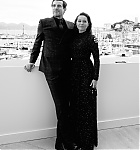
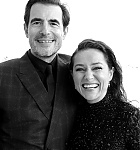
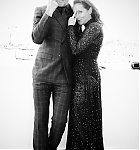
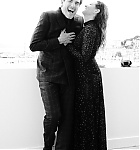
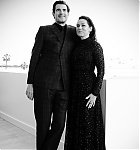
At this moment, Lis, 52, stately, handsome and warm, arrives to join Bang for a late dinner. She says hello and waits at a distant table. Married for 12 years, they met on set in 2002. Bang has no children of his own, but she has two, aged 31 and 20, plus a grandson of nine. Blimey, she must have started young! “Yes, I was a stepgrandpa when I was 42!”
He is raffishly attractive, ageing elegantly, his only exercise tennis “but not right now because I’ve f***ed my arm. And I hate the gym.” While as self-obsessed as every actor, he’s unusually self-deprecating. Christian in The Square uses his looks and power to pick up women, barely learns their name, then avoids their calls. Does Bang identify with him? “No. I had girlfriends – one for, like, seven years, when I was between 30 and 37 … No, I was never very good at that really. Not very outgoing in that sense, going out and picking up girls. I never did it.”
Lis returns as I stand up to leave and I ask her if success has changed her husband? She nods solemnly, then bursts out laughing. “No,” she says. “He’s just as nice.” Has she forgiven him yet for leaving that party at Cannes? She rolls her eyes at Bang, who looks at her pleadingly. “Almost.”
Shoot credits
Styling Rachael Dove. Claes Bang wears shirt, £190, AMI (harveynichols.com); jeans, £200, Incotex (slowear.com)